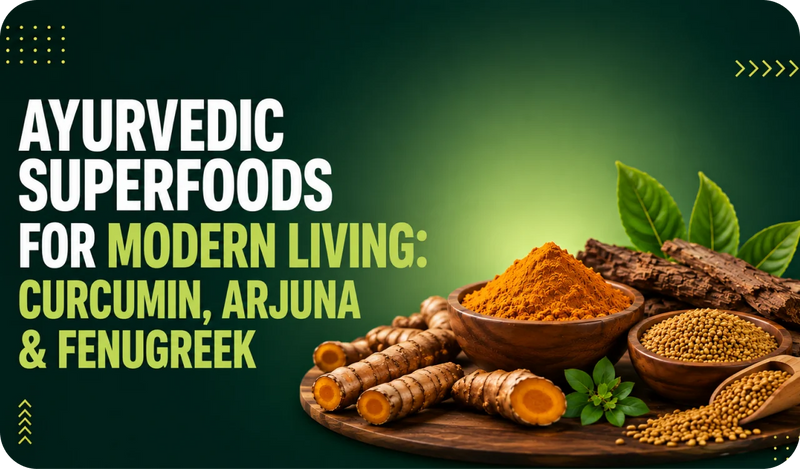
Ayurvedic Superfoods for Modern Living: Curcumin, Arjuna & Fenugreek

In today’s fast-paced lifestyle, maintaining a balanced diet and mindful routine has become increasingly important. Ayurveda, one of India’s traditional systems of knowledge, has long recognized the importance of herbs, spices, and plant-based ingredients as part of everyday nourishment and wellness.
Among the many traditional ingredients used in Indian households, Curcumin, Arjuna, and Fenugreek have gained considerable attention for their nutritional properties and traditional significance.
From adding turmeric to everyday meals to including fenugreek in traditional recipes, these familiar ingredients can be incorporated into a balanced lifestyle in simple and practical ways.
Let’s explore these traditional ingredients and how they can complement modern everyday living.
1. Curcumin – A Traditional Turmeric Compound
Curcumin is one of the naturally occurring compounds found in turmeric (Curcuma longa), a popular spice widely used in Indian cooking. Turmeric has been traditionally valued for its distinctive colour, flavour, and place in Indian culinary and wellness practices.
Why Include Curcumin in Your Wellness Routine?
-
Rich in antioxidant compounds: Curcumin is known for its antioxidant properties and can be included as part of a varied, balanced diet.
-
Supports everyday wellness: Turmeric has traditionally been used as part of daily dietary practices.
-
Traditional digestive use: Turmeric has a long history of culinary and traditional use alongside meals.
-
Easy to incorporate: Turmeric can be conveniently included in everyday recipes and beverages.
How to Include Turmeric in Your Diet
-
Add turmeric to curries, dals, soups, and vegetables.
-
Use turmeric while preparing traditional dishes.
-
Enjoy a warm turmeric-based beverage as part of your daily routine.
-
Curcumin-containing dietary supplements can be considered according to the product's recommended usage.
2. Arjuna – A Traditionally Valued Ayurvedic Ingredient
Arjuna (Terminalia arjuna) is a tree traditionally recognized in Ayurveda, particularly for its historical significance in Indian herbal practices. Its bark has been used traditionally in various Ayurvedic preparations.
Today, Arjuna continues to be included in a variety of traditional wellness formulations.
Why Is Arjuna Popular?
-
Traditionally valued for wellness: Arjuna has a long history of use in Ayurveda.
-
Plant-based ingredient: It is derived from a botanical source and is used in traditional preparations.
-
Contains naturally occurring plant compounds: Arjuna is valued for its naturally occurring constituents.
-
Fits into traditional wellness practices: Arjuna-based preparations can complement a balanced lifestyle when used appropriately.
How to Include Arjuna
Arjuna is available in different forms, including powders, decoctions, and dietary formulations. When using a packaged product, always follow the serving size and directions provided on the product label.
If you are taking medication or have a health condition, consult a qualified healthcare professional before adding concentrated herbal products to your routine.
3. Fenugreek – A Versatile Traditional Ingredient
Fenugreek (Trigonella foenum-graecum), commonly known as methi, is both a popular culinary ingredient and a traditionally used herb. Fenugreek seeds and leaves are commonly incorporated into Indian cuisine.
Fenugreek seeds contain dietary fibre and other naturally occurring plant compounds, making them an interesting addition to a varied diet.
Why Include Fenugreek in Your Diet?
-
Source of dietary fibre: Fenugreek seeds naturally contain fibre.
-
Supports a balanced diet: Its versatility makes it easy to incorporate into everyday meals.
-
Traditionally used for digestive wellness: Fenugreek has a long history of traditional dietary use.
-
Easy to enjoy: Both seeds and leaves can be used in a variety of recipes.
How to Use Fenugreek
-
Add fresh methi leaves to vegetables, dals, or traditional preparations.
-
Use fenugreek seeds while preparing curries and other dishes.
-
Include small quantities of fenugreek powder in suitable recipes.
-
If using a fenugreek-based dietary supplement, follow the recommended serving instructions on the label.
Why These Traditional Ingredients Matter Today
Modern lifestyles can often involve irregular meals, sedentary routines, and increased dependence on convenience foods. This makes a balanced diet and healthy daily routine particularly important.
Traditional ingredients such as Curcumin, Arjuna, and Fenugreek can be incorporated into a wholesome lifestyle by:
-
Adding variety to everyday meals.
-
Providing plant-based ingredients as part of a balanced diet.
-
Contributing naturally occurring nutrients and plant compounds.
-
Complementing healthy eating and mindful lifestyle practices.
However, these ingredients should not be considered substitutes for a balanced diet, medical treatment, or prescribed medication.
Simple Ways to Incorporate Them Into Your Lifestyle
You don't need to make major changes to enjoy these traditional ingredients.
🌿 Start With Your Meals
Use turmeric and fenugreek regularly in home-cooked dishes to add flavour and variety.
🌿 Explore Traditional Preparations
Arjuna and other Ayurvedic ingredients can be used in traditional preparations according to appropriate serving directions.
🌿 Choose Balanced Nutrition
Pair traditional ingredients with vegetables, fruits, whole grains, pulses, adequate protein, and sufficient hydration.
🌿 Stay Active
Regular physical activity, adequate sleep, and stress-management practices can complement a healthy dietary routine.
🌿 Follow Product Directions
When choosing a dietary supplement containing Curcumin, Arjuna, or Fenugreek, always follow the recommended usage mentioned on the product label.
Precautions and Responsible Use
Although these ingredients are traditionally used and commonly found in Indian diets, concentrated herbal or dietary supplements should be used responsibly.
-
Do not exceed the recommended serving size.
-
If you are taking medication or have an existing health condition, consult a qualified healthcare professional before using concentrated herbal supplements.
-
Pregnant or breastfeeding women should seek professional advice before consuming herbal supplements.
-
Individuals with specific dietary or medical requirements should consult a healthcare professional before making significant dietary changes.
-
Dietary supplements should not be used as a replacement for prescribed medicines or a balanced diet.
Bringing Traditional Wisdom Into Modern Living
Curcumin, Arjuna, and Fenugreek are examples of traditional plant-based ingredients that continue to have a place in modern Indian kitchens and wellness routines.
Whether it is turmeric in your everyday cooking, methi in a traditional meal, or an appropriately formulated Arjuna product, these ingredients can be enjoyed as part of a balanced diet and healthy lifestyle.
The key is not to rely on a single ingredient for wellness, but to combine wholesome nutrition with regular physical activity, adequate rest, hydration, and mindful lifestyle choices.
Traditional ingredients, balanced nutrition, and mindful living can come together to create a practical approach to everyday wellness.