
Eggless Baking Made Better: How Apple Cider Filtered Vinegar Elevates Rise, Texture & Softness in Cakes and Muffins
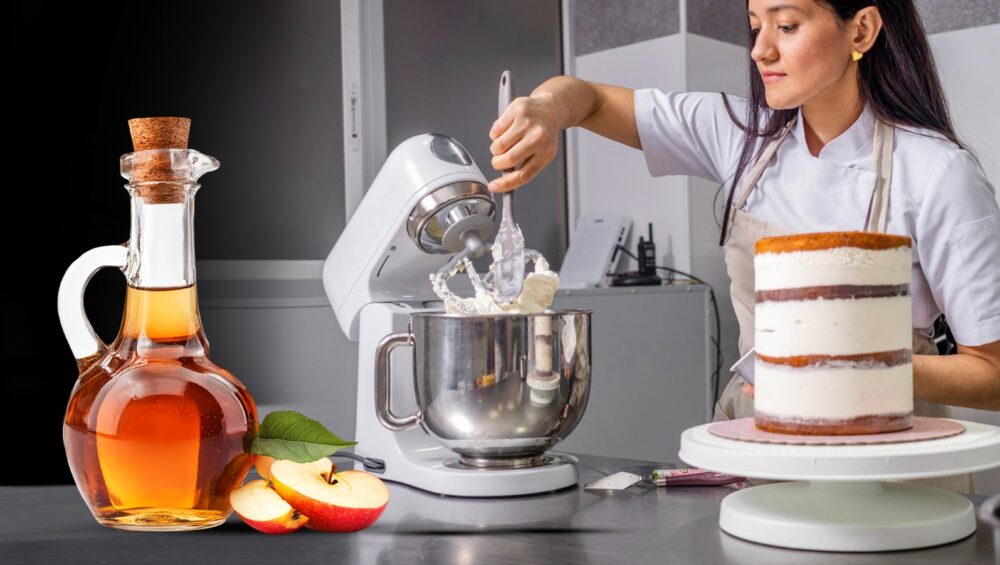
Eggless baking has transformed from a niche requirement into a mainstream demand across modern bakeries, café chains, home bakers, FMCG snack brands, and cloud kitchens. With more customers choosing vegetarian, vegan, or allergy-friendly options, eggless cakes and muffins are no longer an alternative—they are a standard menu offering.
But anyone working in the baking industry knows one truth:
Removing eggs changes everything.
Eggs naturally provide structure, aeration, emulsification, richness, and moisture. Without them, cakes can turn dense, heavy, or crumbly. Getting the right texture becomes a challenge—especially when baking at commercial scale.
This is exactly where ACVR (Apple Cider Vinegar Raw & Filtered) steps in as a natural, dependable, and clean-label solution.
The Power of ACVR: Why It Works in Eggless Baking
To understand why ACVR is important, we must look at how eggless baking actually works.
Most eggless recipes rely on baking soda or baking powder to create the lift that eggs normally help with.
But baking soda needs an acid to activate it. Without a proper acid, the batter does not rise well—resulting in flat or compact cakes.
ACVR brings the perfect balance of natural acidity (around pH 5) that reacts instantly with baking soda, releasing carbon dioxide bubbles.
These bubbles get trapped in the batter, helping it expand and rise beautifully.
This simple reaction becomes the foundation for:
- Better aeration
- Soft crumb
- Improved fluffiness
- Even texture
- Moist, tender cakes
ACVR, though mild in flavor, becomes extremely powerful in performance.
How ACVR Improves Eggless Baking: A Deep-Dive Explanation
1. Boosts Leavening and Rise – In eggless baking, creating volume is the biggest hurdle.
When ACVR meets baking soda:
- The leavening reaction begins immediately
- More gas bubbles form
- The batter rises faster and higher
- Cakes get a lighter structure instead of a dense one
Commercial bakeries experience a higher batter expansion rate, especially in muffins and cupcake lines where dome shape is important.
2. Improves Texture and Crumb Fineness – One of the key functions of eggs is structuring the crumb.
In their absence, ACVR:
- Softens gluten fibres
- Supports even bubble distribution
- Prevents large holes or tunneling
- Helps create a uniform, bakery-style crumb
This ensures every slice looks professional—an important requirement for pastry houses, celebration cakes, and packaged sponge bases.
3. Maintains Moisture and Softness for Longer – ACVR is not just a functional acidifier; it is also a moisture balancer.
It helps:
- Retain water inside the crumb
- Delay drying out
- Enhance softness in stored goods
- Maintain fresh feel for several days
This is essential for bakery manufacturers supplying:
- Packaged muffins
- Tea cakes
- Toast cakes
- Industrial sponge sheets
When used correctly, ACVR leaves no vinegar taste or smell after baking.
4. Encourages a Clean-Label, Chemical-Free Approach – Many industrial eggless recipes rely on synthetic additives such as:
- Acidity regulators
- Dough conditioners
- Shelf-life improvers
ACVR offers a cleaner and more natural alternative.
With consumers increasingly reading ingredient lists, bakeries benefit from using recognizable, natural ingredients—boosting both product quality and market appeal.
How Much ACVR Should You Use? (B2B Batch Ratios Included) :
The ideal usage depends on batch size and baking style.
For Home-Style Recipes
- 1 teaspoon ACVR per 1 cup (120g) flour
OR - 1 teaspoon per 500g batter
For Commercial Bakeries
- 0.5% – 1% of total batter weight
(For example, 10–20g per 2 kg batter)
For Industrial Production Lines
- Add ACVR to the wet mixture for most consistent activation
- Avoid mixing it directly with dry ingredients
This ensures uniform leavening and no early deactivation.
Where ACVR Works Best in Eggless Baking :
Muffins & Cupcakes – Improves dome formation and texture consistency across large batches.
Eggless Celebration Cakes – Ensures soft, airy layers ideal for pastry creams and frosting.
Sponge Sheets – Gives elasticity and prevents cracking in roll cakes and pastry bases.
Tea Cakes & Loaves – Provides moisture, softness, and even grain.
Whole Wheat & Multigrain Cakes – Balances heaviness and gives lift to dense flours.
Vegan and Plant-Based Baking – Becomes a natural replacement for both acidity regulators and egg structure.
Why Modern Bakeries Prefer ACVR Today :
- Works seamlessly with both baking soda and baking powder
- Leaves no smell or taste once baked
- Completely natural—aligns with clean-label food standards
- Easy to handle, store, and dose
- Delivers consistent results across multiple recipes
- Affordable alternative for large-scale production
- Enhances softness without synthetic chemicals
With ACVR, bakers can maintain product quality without compromising colour, taste, or texture.
Conclusion: A Small Ingredient That Makes a Big Difference
Eggless baking doesn’t have to struggle with density, heaviness, or uneven texture.
With the right ingredient—ACVR—bakers can unlock:
- Fluffier cakes
- Better rise
- Moist and tender crumbs
- Longer freshness
- Clean-label appeal
- Consistent batch performance
From artisan bakery counters to high-speed industrial ovens, ACVR has proven to be a reliable, natural, and efficient leavening booster that elevates every recipe it touches.
Check Our Product—Apple Cider Filtered Vinegar