
White Vinegar vs. Chemical Cleaners Which Is More Effective
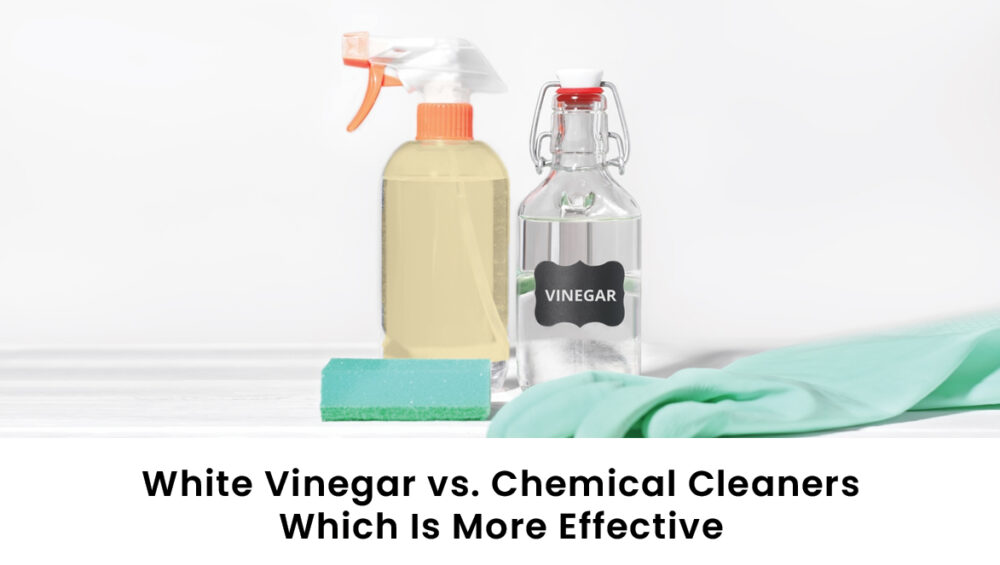
When it comes to household cleaning, there’s an ongoing debate: white vinegar vs. chemical cleaners—which one is better? More homeowners and businesses are turning toward eco-friendly cleaning solutions, while others swear by the effectiveness of traditional chemical cleaning products. Let’s explore how both compare in terms of performance, safety, cost, and environmental impact.
What Is White Vinegar and How Does It Work as a Cleaner?
White vinegar, also known as distilled vinegar, is a natural acid (acetic acid) made through the fermentation of ethanol. It’s commonly used as a natural cleaning solution due to its antibacterial, deodorizing, and degreasing properties.
Key Benefits of Cleaning with White Vinegar:
- Non-toxic and biodegradable
- Safe for kids and pets
- Great for removing odors
- Effective against mold, mildew, and hard water stains
- Affordable and readily available
What Are Chemical Cleaners?
Chemical cleaners include a wide range of commercial cleaning products like bleach, ammonia, and disinfectant sprays. These are specifically formulated to kill bacteria, remove tough stains, and sanitize surfaces.
Advantages of Chemical Cleaning Products:
- Highly effective against pathogens
2) Fast-acting on grease, grime, and stains
3) Wide range of specialized formulas for different surfaces
White Vinegar vs. Chemical Cleaners: Key Comparisons
| Feature | White Vinegar | Chemical Cleaners |
| Effectiveness | Great for mild to moderate cleaning tasks | Superior for deep cleaning and sanitizing |
| Safety | Non-toxic and eco-friendly | May contain harmful chemicals and VOCs |
| Cost | Very affordable | Varies, often more expensive |
| Environmental Impact | Biodegradable | May pollute water and air |
| Smell | Mild acidic smell that fades quickly | Strong scent; may require ventilation |
When to Use White Vinegar
White vinegar is ideal for:
1) Cleaning kitchen countertops (non-granite)
2) Deodorizing drains and garbage disposals
3) Removing hard water stains from faucets
4) Cleaning glass and mirrors
5) Freshening laundry
However, vinegar should NOT be used on natural stone, waxed wood, or aluminum surfaces.
When to Choose Chemical Cleaners
- Use chemical cleaners for:
- Sanitizing toilets and sinks
- Disinfecting surfaces during flu season
- Removing mold from porous materials
- Heavy-duty grease in ovens
The Verdict: Which Is More Effective?
The answer depends on what you’re trying to clean. For everyday messes, white vinegar is an effective and safe alternative. For serious sanitation needs, chemical cleaners offer stronger performance—but with added risks.
Combining both methods can be smart: use vinegar for daily cleaning and chemical products for periodic deep cleans.